Technology is rarely the headline risk in an acquisition, but it often becomes the most expensive surprise after closing. This article explains how structured IT due diligence protects valuation, reduces integration risk, and builds a scalable operating platform across portfolio companies.
Why is Private Equity IT due diligence critical in private equity transactions?
Most acquisition models focus on revenue growth, operational efficiency, and financial structure. Technology is often reviewed at a surface level. The problem is that private equity IT risk hides in plain sight.
Outdated infrastructure, unsupported software, inconsistent security controls, and fragmented Microsoft 365 environments can materially impact EBITDA after closing. These issues do not show up cleanly in a CIM. They appear later as emergency upgrades, compliance failures, productivity losses, or security incidents.
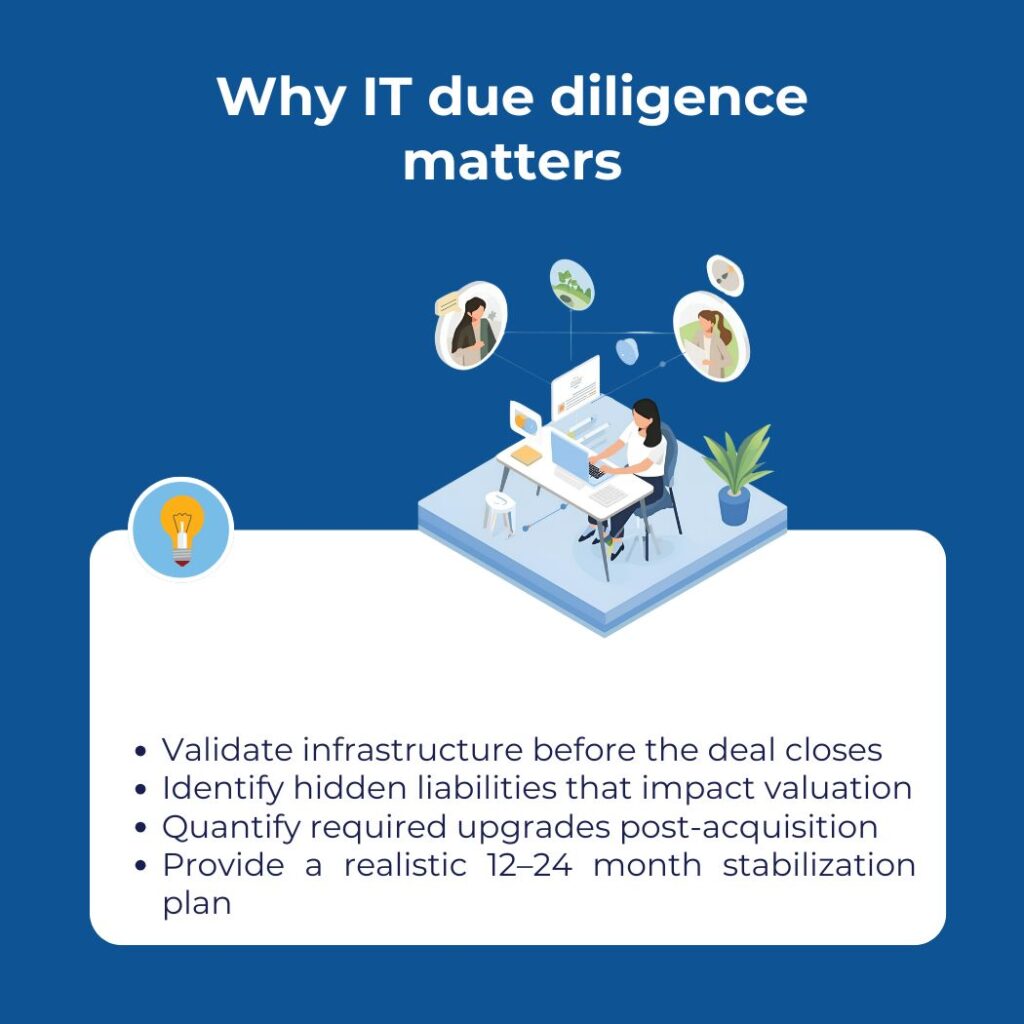
For private equity firms focused on disciplined growth, private equity IT due diligence should answer three core questions:
- Is the current platform stable?
- Is it secure?
- Can it scale without major capital surprises?
If the answer to any of those is unclear, valuation assumptions deserve another look.
What Private Equity IT risks are commonly inherited after acquisition?
When firms skip structured technology diligence, they often inherit:
Unmanaged technical debt
Years of deferred upgrades create fragile systems that fail under growth pressure.
Security exposure
Portfolio companies may lack monitoring, multi-factor authentication enforcement, or modern endpoint protection. This creates risk during integration.
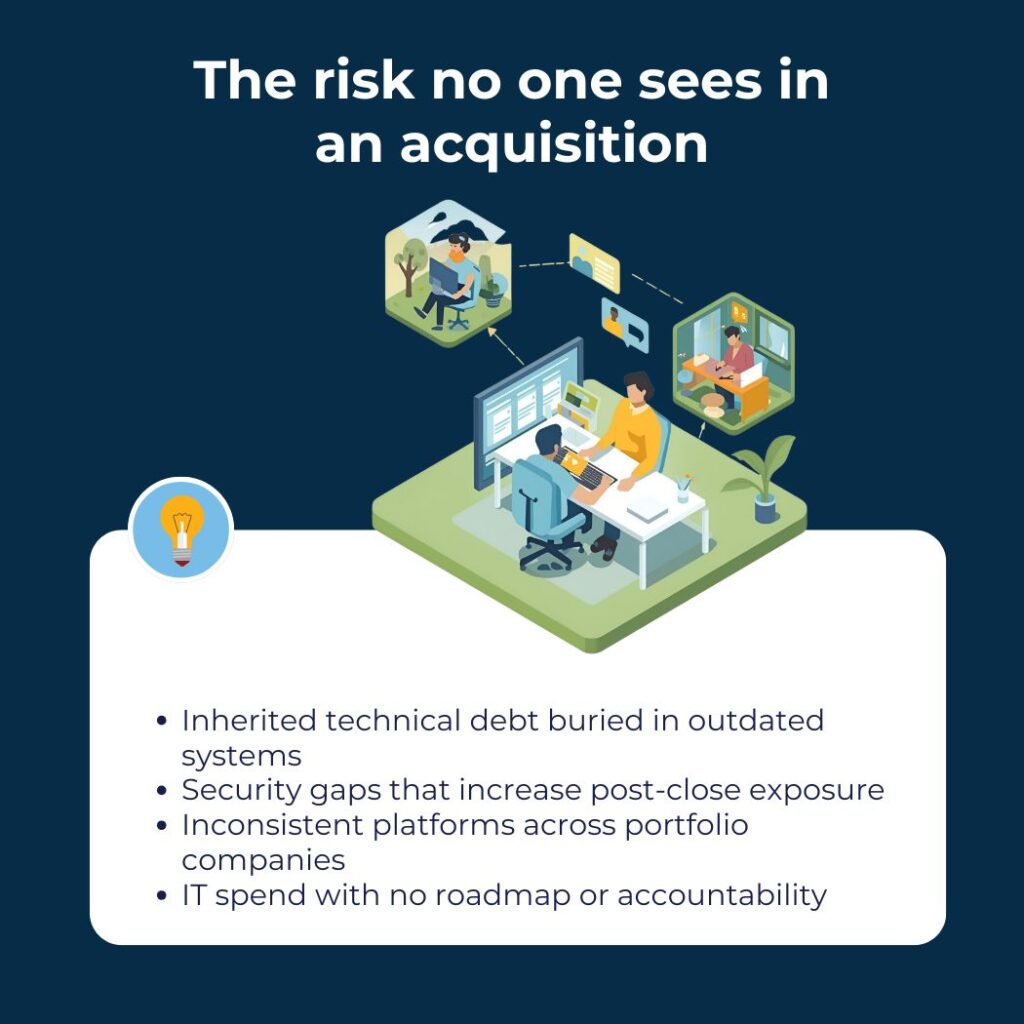
Inconsistent platforms
Each acquisition may operate on a different stack, making integration slow and costly.
Unpredictable capital spend
Devices and infrastructure may be near end of life, requiring immediate replacement after close.
These risks directly impact integration speed, operating margin, and leadership confidence.
What does structured Private Equity IT due diligence look like?
Effective IT due diligence translates technical findings into business risk.
A proper review should include:
- Infrastructure and network assessment
- Security posture evaluation
- Microsoft 365 configuration review
- Device lifecycle and capital forecast analysis
- Backup and disaster recovery validation
- Vendor contract analysis
The goal is not to produce a long technical report. The goal is to produce a clear risk summary in business terms. What must be fixed immediately? What can be phased? What capital should be reserved? What integration challenges should be expected?
This clarity protects valuation and reduces post-close surprises.
How does technology impact post-acquisition integration?
Speed matters after closing. Operating partners need stability fast. Portfolio CEOs need momentum, not disruption.
Without a defined platform, integration becomes reactive. Each company runs differently. Each system behaves differently. Security controls vary. Reporting structures break down.
A standardized technology playbook changes that dynamic.
Instead of rebuilding from scratch every time, the firm deploys:
- A consistent Microsoft 365 structure
- Defined security controls
- Centralized monitoring
- Lifecycle management standards
- Clear onboarding processes for future acquisitions
This creates repeatability across the portfolio. Repeatability reduces cost and risk.
How does scalable Private Equity IT support valuation growth?
Private equity firms win through disciplined execution and predictable growth. Technology can either support that strategy or quietly undermine it.
A scalable IT platform:
- Improves operational visibility
- Reduces downtime across entities
- Supports remote and distributed leadership
- Protects against cyber risk that could derail exit timing
- Aligns capital planning with growth forecasts
Buyers evaluate risk during exit. A portfolio company with documented processes, standardized systems, and disciplined lifecycle management presents a stronger profile than one operating on fragmented legacy systems.
Technology maturity influences buyer confidence.
How ProSafeIT supports private equity firms and portfolio companies
ProSafeIT provides two core functions for private equity partners.
First, structured private equity IT due diligence before close. We identify technical debt, quantify risk, and provide a realistic 12 to 24 month stabilization roadmap.
Second, a scalable operating platform after close. Our proven playbook standardizes security, Microsoft 365 configuration, monitoring, and lifecycle planning across entities.
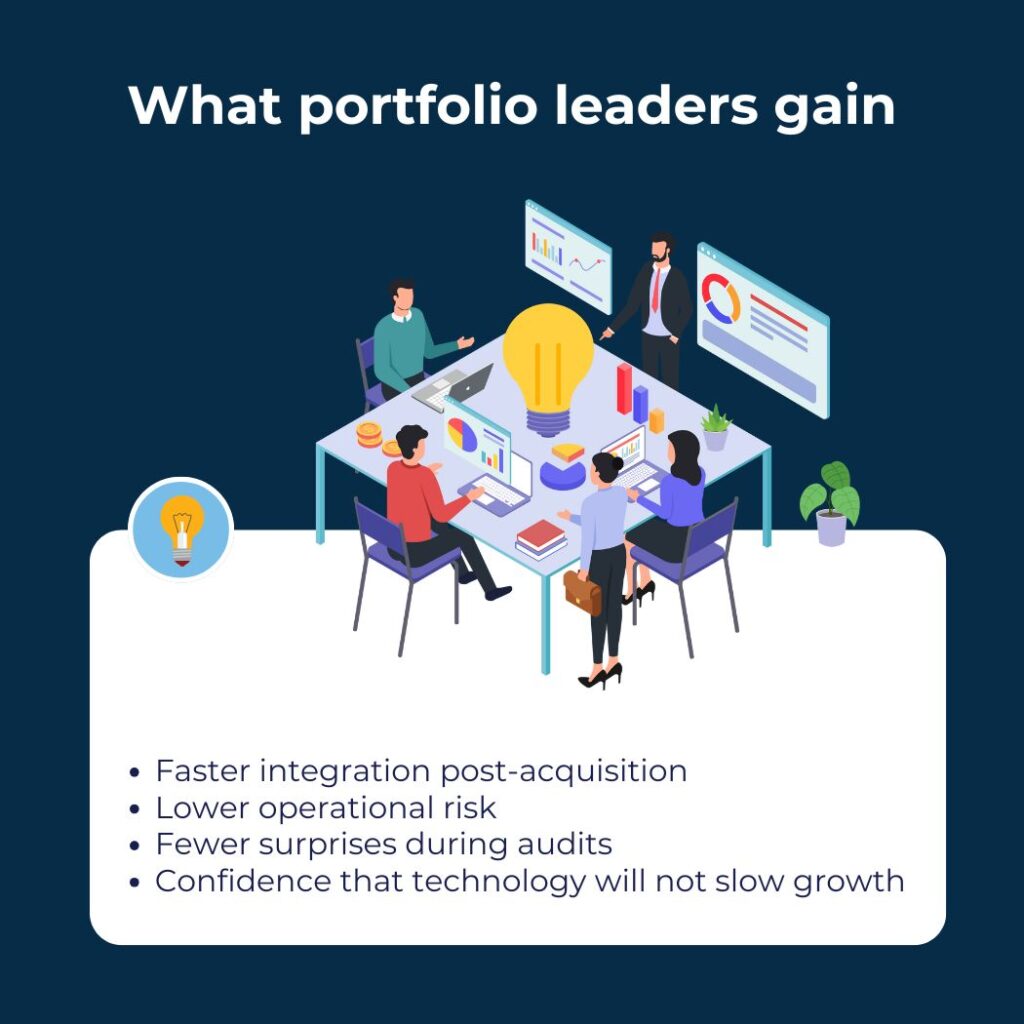
We work in business language, not technical jargon. Operating partners get clarity. Portfolio CEOs get stability. Investment partners get confidence that technology will not become the surprise expense that erodes returns.
If your firm is evaluating acquisitions or preparing portfolio companies for growth, private equity IT risk deserves structured attention before the deal closes.
Planning your next acquisition?
If you are reviewing a target company and want to understand the technology risk before signing, schedule a due diligence consult at Stringfellow.com.