Most firms build in-house IT for the right reason. Control. Familiarity. Someone down the hall who “knows our systems.”
That approach works early on.
Then the company grows.
Headcount increases. Systems multiply. Security expectations rise. Remote work enters the picture. Clients start asking harder questions. Compliance gets real.
And suddenly the same structure that once felt safe becomes a quiet drag on growth.
This is not a people problem. It is a model problem.
Listen to a deep dive podcast about the problem below.
The hiring gap nobody talks about
At a growth stage firm, leaders often believe the next logical step is hiring an internal IT manager, IT Director, or systems administrator.
The expectation is reasonable. One person who understands the business and keeps everything running.
The reality is different.
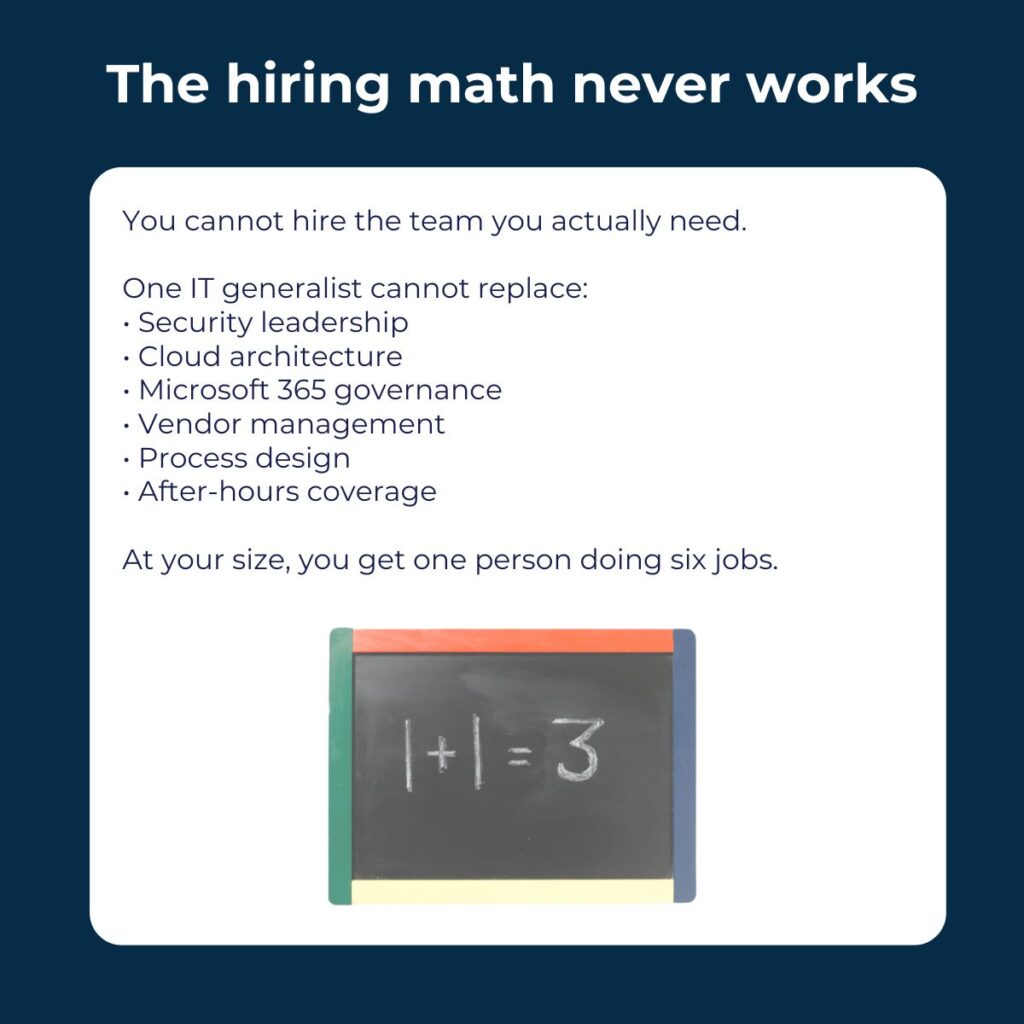
Modern business IT requires multiple disciplines operating at the same time:
- Security strategy and monitoring
- Cloud and Microsoft 365 governance
- Device lifecycle management
- Vendor coordination
- Policy design
- End-user support
- Business continuity planning
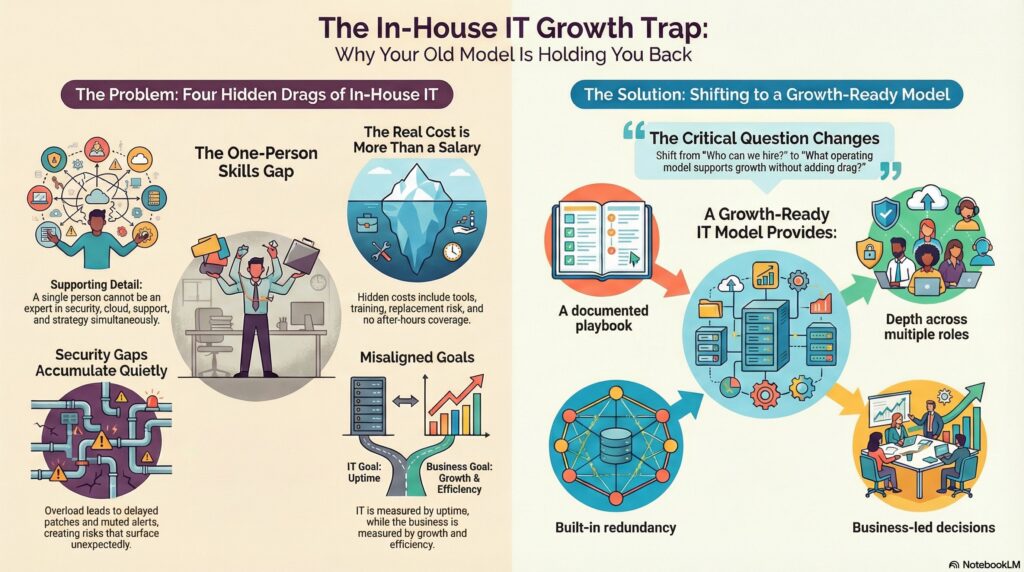
One person cannot do all of this well. Not sustainably. Not at the pace a growing company requires.
What happens instead is prioritization by urgency. Whatever is on fire gets handled. Everything else waits.
Why the cost curve works against you
In-house IT looks cheaper on paper.
One salary. One benefits package. Done.
Except that salary is only the starting point.
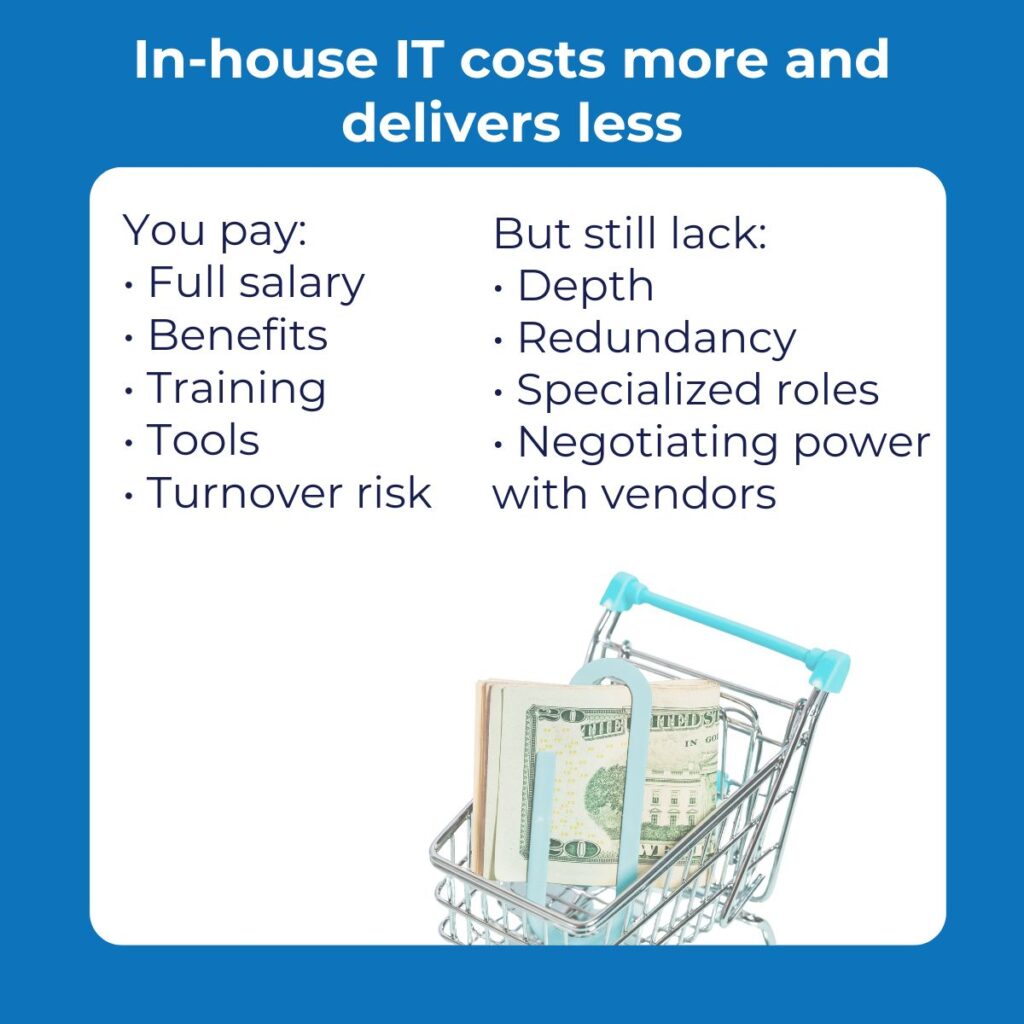
You also absorb:
- Training and certifications
- Tool sprawl
- Replacement risk
- Knowledge silos
- No after-hours coverage
- No redundancy
At the same time, you lose access to scale. You pay retail for tools. You lack leverage with vendors. You cannot spread cost across multiple specialists.
The firm pays more for less capability, even if the line item feels smaller.
Asked to buy another tool? That might not be the best solution.
Security slips without intent
No business leader decides to underinvest in cybersecurity.
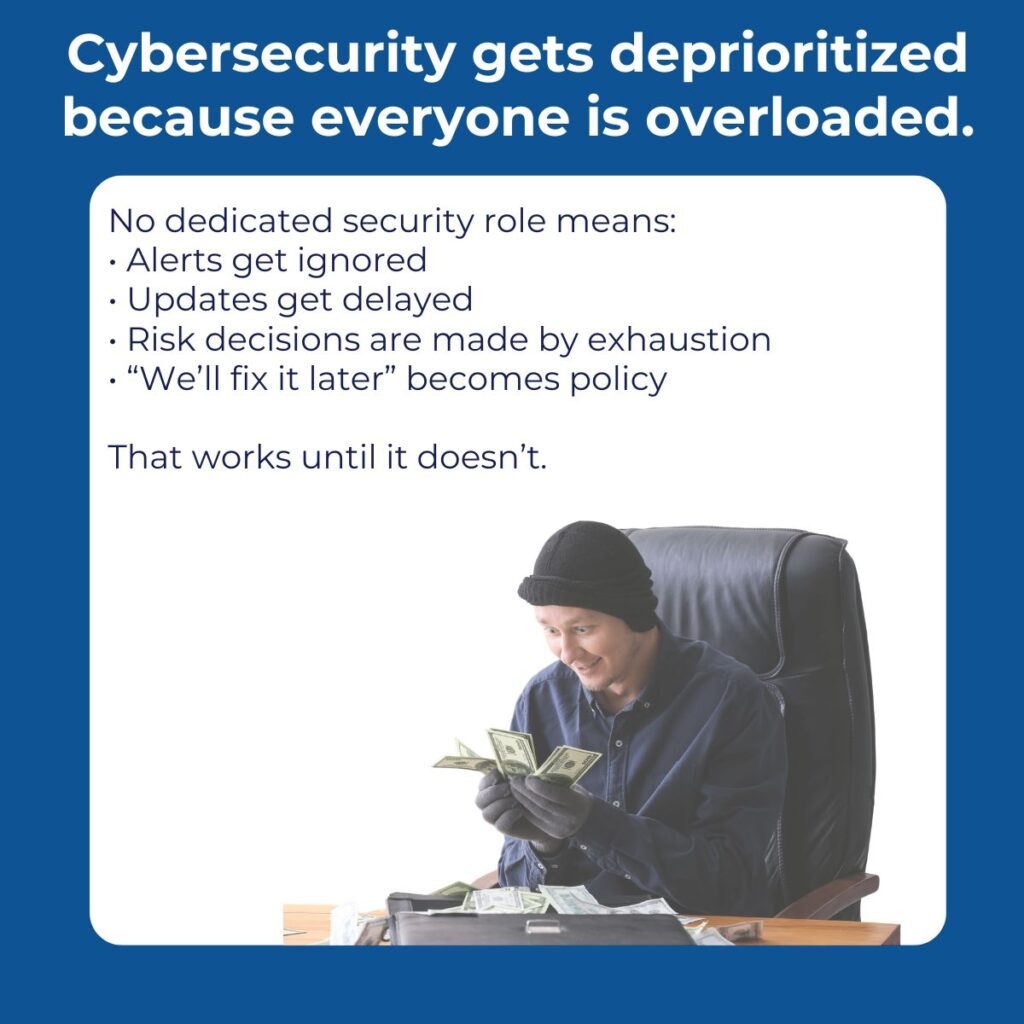
It happens because there is no dedicated owner.
When the same person responsible for onboarding, troubleshooting, vendors, and projects is also expected to manage security, tradeoffs get made.
Patching gets delayed. Alerts get muted. Reviews get skipped. Decisions get deferred.
Not out of negligence. Out of overload.
Security gaps at this stage are rarely dramatic. They are quiet. They accumulate. And they tend to surface at the worst possible moment.
The misalignment problem leaders feel but struggle to name
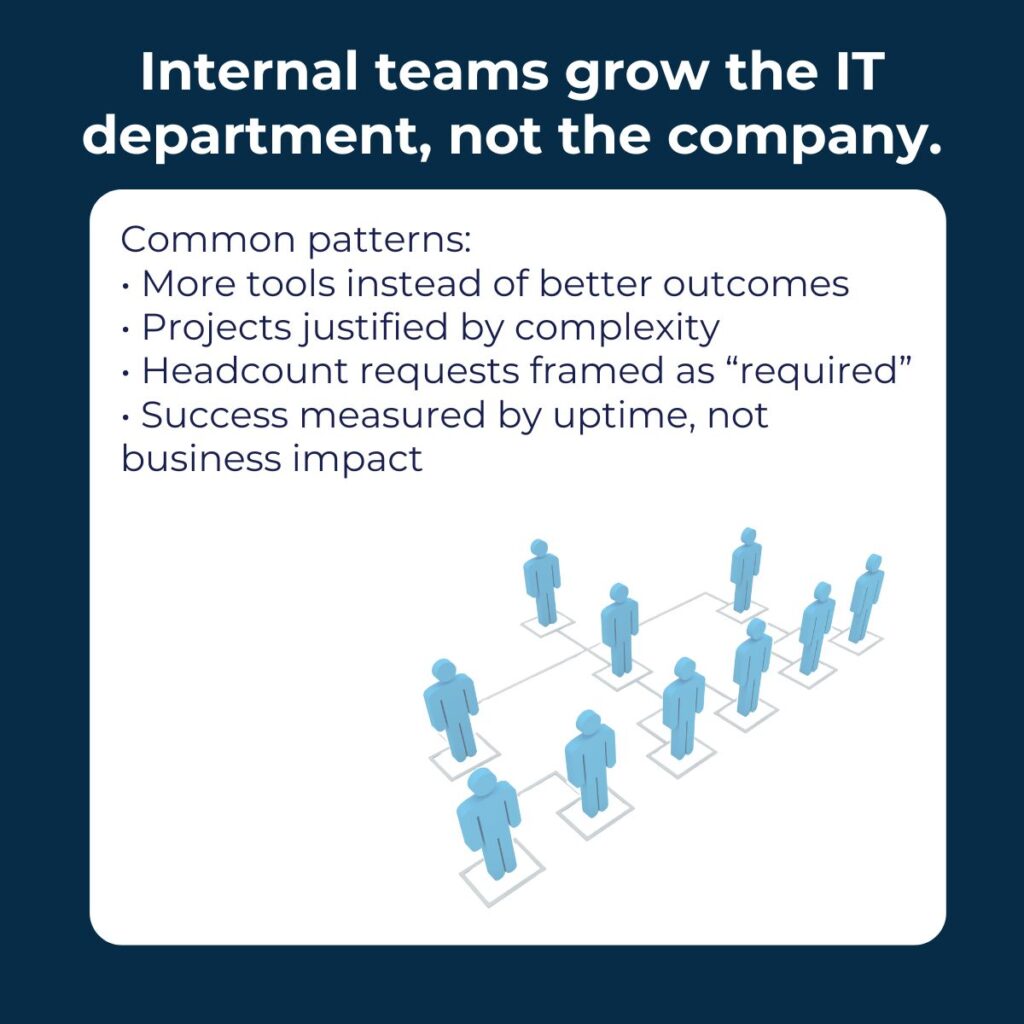
Internal IT teams are measured by technical success.
Uptime. Ticket closure. System performance.
Business leaders are measured by growth, efficiency, and risk reduction.
These goals are not the same.
Over time, internal IT teams naturally advocate for:
- More tools
- More control
- More headcount
- More complexity justified as necessity
The organization ends up optimizing the IT function instead of the business.
This is not malicious. It is structural.
Why smart IT people still struggle here
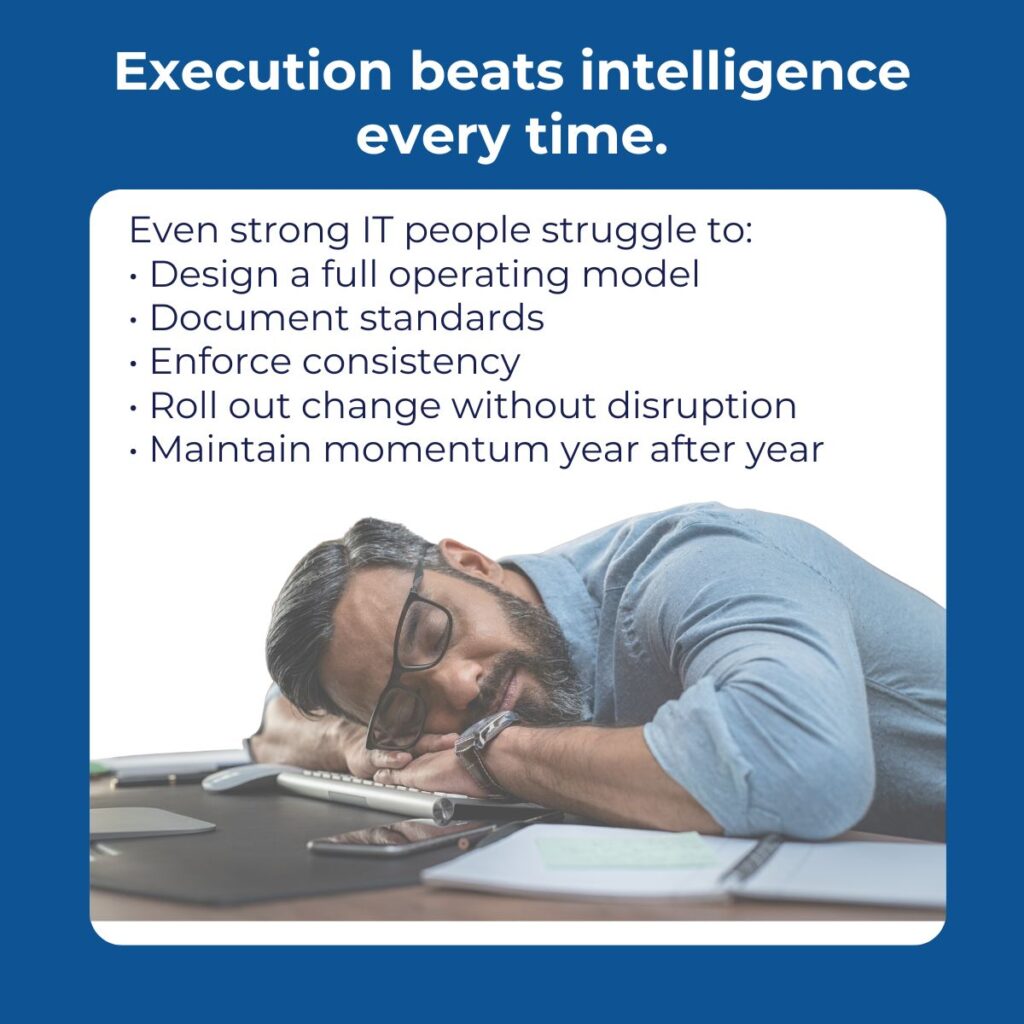
Even strong IT professionals run into the same wall.
They are asked to:
- Design the model
- Execute it
- Maintain it
- Improve it
- Secure it
- Support it
While keeping the lights on.
There is no time to build a real operating playbook. No space to enforce standards consistently. No backup when something breaks.
Execution becomes reactive. Improvement stalls.
Growth exposes everything
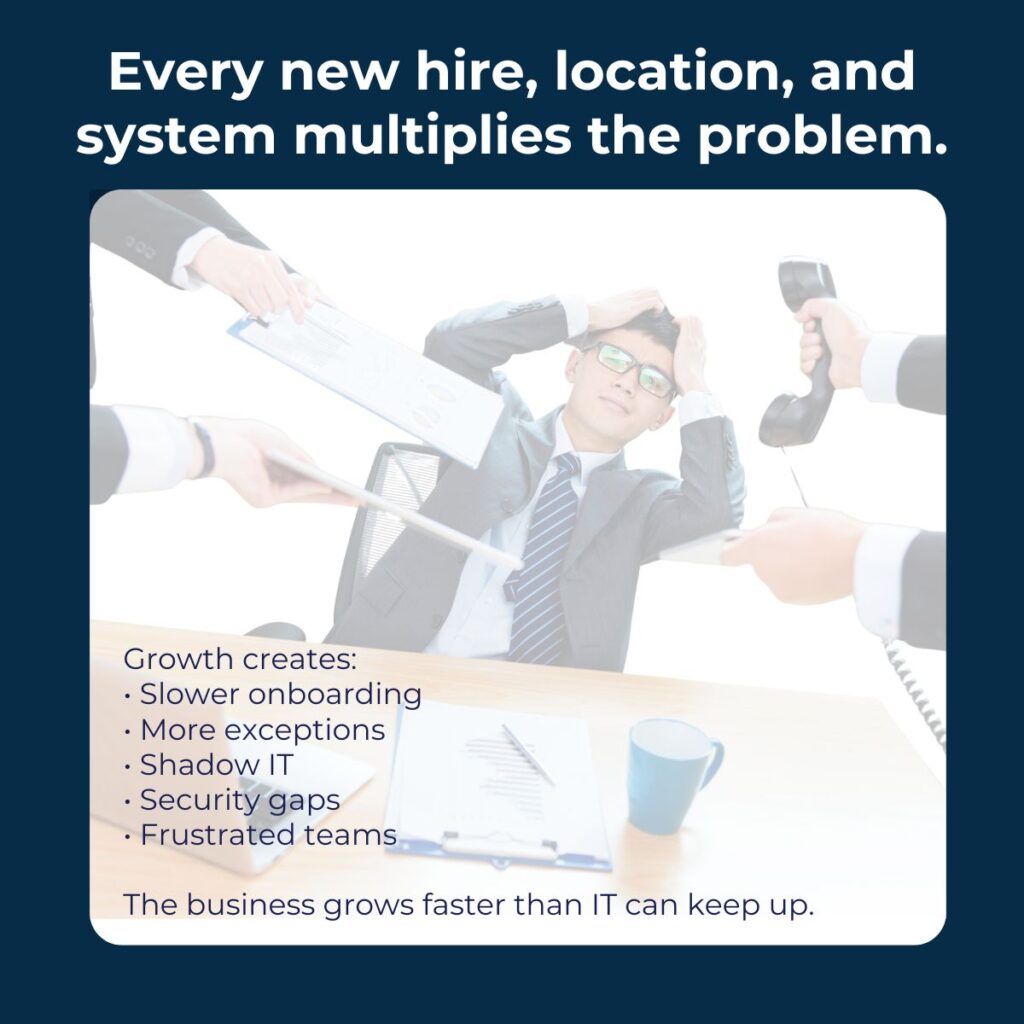
As the firm grows, small cracks become visible.
Onboarding slows down. Exceptions multiply. Security becomes harder to explain. Employees work around systems instead of through them.
Leaders feel it as friction. As drag. As unexplained risk.
Most assume the answer is more internal IT.
It rarely is.
Growth exposes delivery models that were never built to scale.
What actually works at this stage
Growth-stage firms need a different model.
One that provides:
- A documented playbook
- Depth across roles
- Built-in redundancy
- Business-led decision making
- Predictable execution
This is not about outsourcing responsibility. It is about gaining leverage.
The firms that scale cleanly stop asking, “Who can we hire?”
They start asking, “What operating model supports growth without adding drag?”
That is the shift.
Next Steps