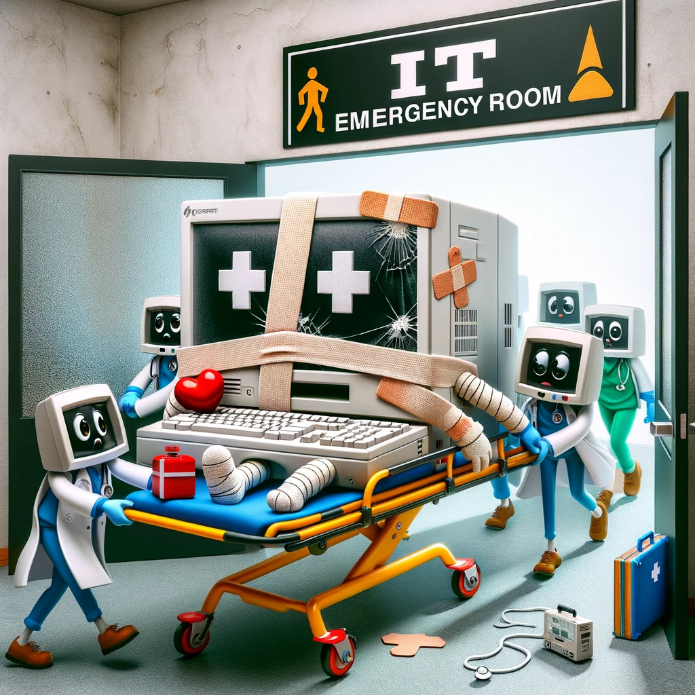
Technology should help your providers see more patients, reduce administrative burden, and support growth. Unfortunately, many healthcare organizations still manage IT the same way they’ve managed it for years: they wait until something breaks.
A server goes down.
The EHR slows to a crawl.
A provider can’t log in.
Someone clicks a phishing email.
Then everyone scrambles.
The problem is that reactive IT support doesn’t simply create frustration. It creates downtime, lost productivity, security risks, and unexpected costs.
The most successful healthcare organizations have learned a different lesson: the best IT issues are the ones that never happen in the first place.
The Hidden Cost of Reactive IT
Most healthcare leaders don’t wake up thinking about technology.
They think about patient experience, staffing, provider productivity, compliance, and growth.
But when IT isn’t proactively managed, technology quickly becomes a distraction from those priorities.
A reactive approach often leads to:
- Unexpected downtime
- Delayed patient care
- Increased cybersecurity risk
- Frustrated providers and staff
- Emergency spending on hardware and support
- Difficulty scaling to new locations
The result is an organization that constantly feels like it’s playing defense.
What Proactive IT Support Looks Like
Proactive IT support focuses on preventing problems rather than responding to them.
Instead of waiting for an outage, systems are monitored continuously.
Instead of replacing computers after they fail, hardware is upgraded according to a strategic lifecycle plan.
Instead of hoping security tools are enough, cybersecurity is reviewed, tested, and improved on an ongoing basis.
The goal is simple:
Keep your providers focused on patients instead of technology problems.
Four Ways Proactive IT Creates Better Outcomes
1. Less Downtime
Even a brief technology outage can disrupt schedules, frustrate staff, and impact patient care.
Continuous monitoring helps identify warning signs before they become major incidents, minimizing interruptions to daily operations.
2. Better Cybersecurity
Healthcare remains one of the most targeted industries for cyberattacks.
A proactive IT strategy includes:
- Security awareness training
- Vulnerability management
- Endpoint protection
- Backup verification
- Incident response planning
Security becomes an ongoing process instead of a last-minute reaction.
3. Predictable Technology Costs
Reactive IT creates surprise expenses.
Proactive IT creates a roadmap.
Organizations can budget for hardware replacements, cybersecurity investments, and growth initiatives before they become emergencies.
That means fewer unexpected invoices and more confidence in future planning.
4. Strategic Growth Support
Opening a new location?
Adding providers?
Integrating an acquisition?
Technology should accelerate those initiatives, not slow them down.
A proactive IT partner helps align technology decisions with business goals so growth becomes easier and more predictable.
The Difference Between IT Support and IT Strategy
Many providers assume that having someone available to fix issues is enough.
But support alone is not a strategy.
A true healthcare IT partner helps you:
- Plan future investments
- Improve security posture
- Standardize systems
- Reduce operational friction
- Align technology with organizational goals
The conversation shifts from:
“How quickly can you fix this?”
to
“How do we make sure this never happens again?”
Healthcare Organizations Need More Than a Help Desk
Healthcare leaders already have enough challenges competing for their attention.
Technology should not be one of them.
The right proactive IT strategy helps reduce downtime, improve security, support compliance, and create a better experience for both providers and patients.
When technology is managed proactively, your team spends less time dealing with problems and more time focusing on what matters most: delivering exceptional patient care.