Summary: Construction leaders are dealing with tighter timelines, more technology on every jobsite, and growing pressure to keep teams productive across multiple sites. This post explains why construction IT planning matters for construction firms and how ProSafeIT supports crews, schedules, and margins.
Listen to a Deep Dive Audio Summary
What slows construction teams down?
Construction moves fast. New sites open, close, and shift location every week. Crews rely on tablets, laptops, and cloud files at a pace most MSPs never see. When a login fails or a device crashes, the cost shows up in labor, schedule delays, missed inspections, and frustrated clients.
The friction usually comes from the same handful of issues. A new jobsite goes live without a reliable network plan. Files do not sync correctly between office and field teams. A subcontractor has access to the wrong data. An old laptop finally gives out at the worst possible moment.
These problems may look technical on the surface, but the impact is operational and financial.
Why local IT providers struggle with construction IT needs
Most IT providers do well in stable office environments. Construction does not work like that. Every new location is a fresh operational challenge. The pace is fast, schedules shift daily, and the pressure on superintendents and project managers is high.
This is where local IT providers often fall short.
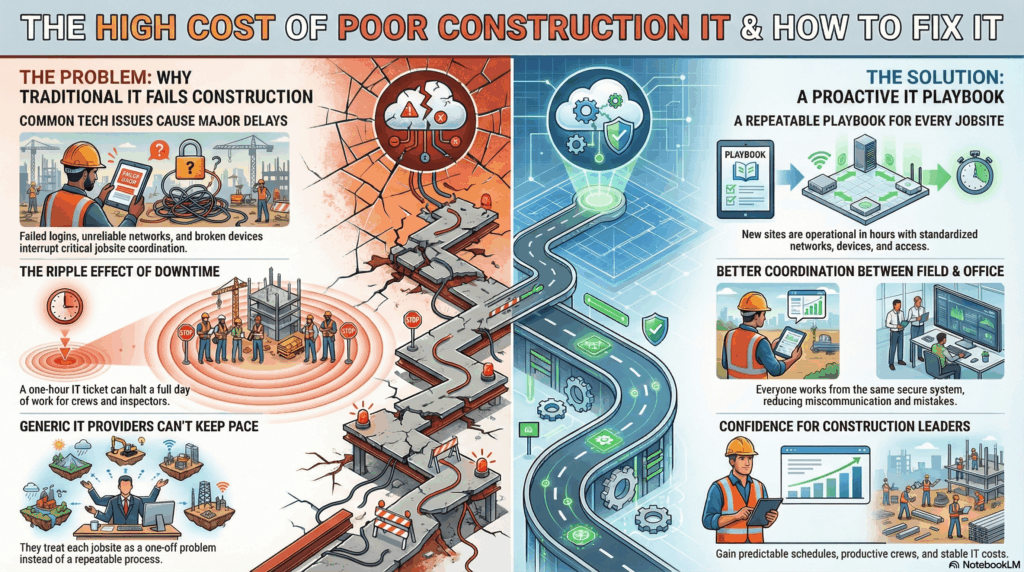
They cannot support multiple sites at once. They treat each jobsite as a one-off problem instead of part of a larger process. They react after something breaks instead of setting standards that keep crews moving. This leaves you wondering why technology always becomes the roadblock during critical moments.
The true cost of jobsite delays
On a spreadsheet, a construction IT problem may look like a one-hour ticket. In construction, that single hour can ripple across a full day of work. Crews wait for access. Inspectors stand by while files upload. A deadline slips and margin shrinks. Even a small issue can interrupt a sequence that took weeks to coordinate.
Firms rarely account for these hidden costs. Once they do, construction IT moves from a back-office task to a strategic part of schedule control and risk management. Leaders start asking whether technology is helping the company stay efficient or creating more uncertainty.
How ProSafeIT supports construction operations
ProSafeIT was built for businesses that grow quickly, operate across many locations, and depend on consistent work. Construction fits that profile.
The approach is simple: use a proven playbook that creates a predictable environment for field and office teams.
For jobsite setup, this means having a repeatable plan for networks, devices, access controls, and Microsoft configuration.
New sites can be up and running in hours, not multiple days. Crews can start work with systems that already fit the way they operate.
For equipment planning, ProSafeIT includes a lifecycle process that reduces surprise failures. Devices used in the field take more abuse than traditional office hardware. Refreshing them at the right time prevents costly downtime and keeps productivity high.
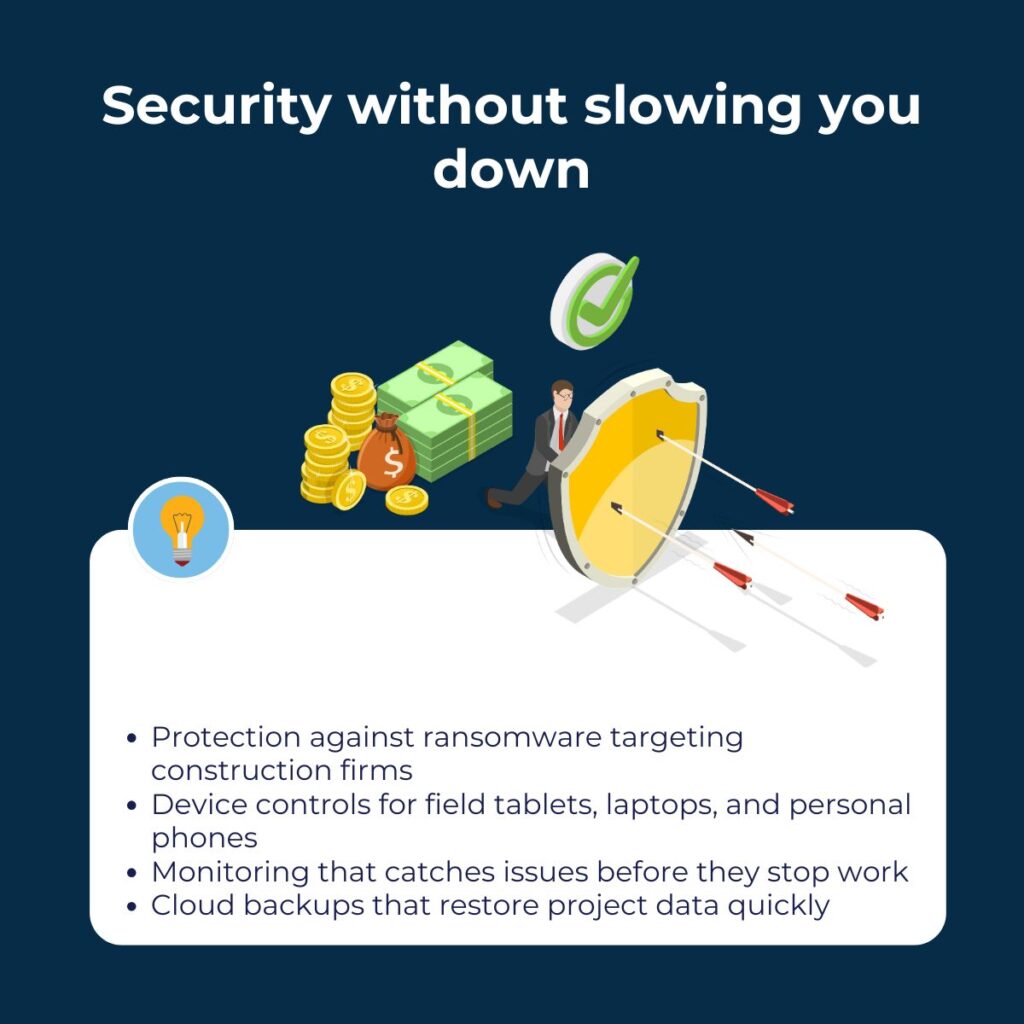
For security, ProSafeIT protects the business without slowing projects down. Construction firms have become attractive targets for ransomware and wire fraud because of the large number of invoices, vendors, and subcontractors involved.
Leaders need protection that works quietly in the background while staff stays focused on moving projects forward.
Better coordination between field and office
Many construction delays come from miscommunication or mismatched information. Files sit in one location while someone in the field needs them. A superintendent cannot access the latest plan set. A project manager works from an outdated version. These problems add unnecessary friction, especially when projects span multiple states or involve large teams.
ProSafeIT solves this through consistent setup, secure file structures, and access controls that match the firm’s workflow. When everyone works from the same system, the work becomes more predictable. Office staff can support multiple sites without lost time. Field teams spend less time troubleshooting and more time building.
The results construction leaders want
Construction executives want confidence in three areas. They want projects that stay on schedule, crews that stay productive, and budgets that stay predictable. They also want a construction IT partner who understands the time pressure and does not require handholding.
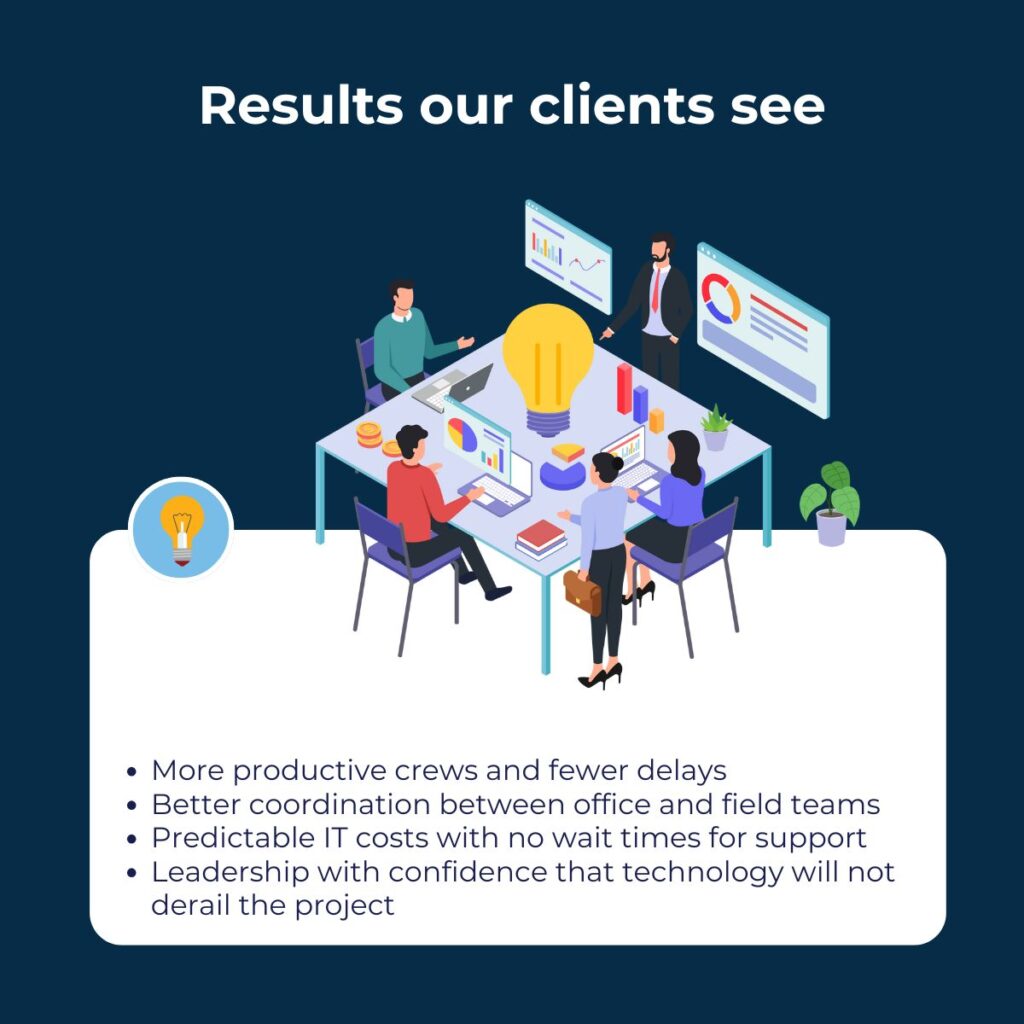
This is where ProSafeIT stands out. Firms that use the playbook see fewer jobsite delays, smoother onboarding of new projects, better coordination across departments, and more predictable construction IT costs.
The technology works in the background so leaders can stay focused on growth, client relationships, and operational performance.
Next Steps
If you want to explore how ProSafeIT supports construction operations, schedule a quick call today.