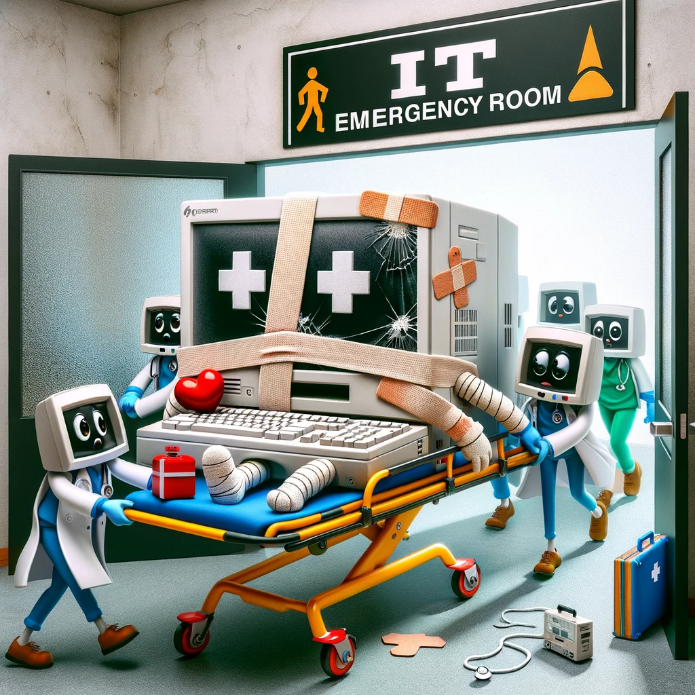
In the healthcare industry, the emphasis often lies on a reactive approach and addressing issues as they emerge. This mindset persists in the healthcare IT sector, where immediate response rather than prevention is frequently preferred. However, just as in personal health, prevention is usually the best strategy. A proactive IT approach is one of the ways the philosophy of HealthSafeIT diverges from the norm, emphasizing a proactive IT approach to support that mirrors the benefits of regular wellness checks over emergency room visits.
The Proactive IT Approach with HealthSafeIT
Just as taking care of your health involves regular exercise, a balanced diet, and healthy habits, HealthSafeIT incorporates these principles into IT. HealthSafeIT acts like a personal trainer or nutritionist for your healthcare clinic’s IT needs, providing ongoing support, training, and improvement suggestions tailored to your specific environment. The goal is to maintain the health of your IT infrastructure so that it supports your operations seamlessly without needing emergency interventions.
Scheduled Maintenance: The Annual Physical for Your IT
An annual physical exam with your doctor helps catch potential health issues before they become serious. Similarly, HealthSafeIT’s proactive support includes scheduled maintenance, ongoing projects, upgrades, and constant monitoring of your IT systems. This approach is akin to a well-balanced diet and regular exercise for your IT infrastructure, keeping it running smoothly and efficiently and reducing the likelihood of unexpected downtimes or crises.
However, the work we do in the background proactively is ONGOING, meaning we won’t ignore a computer for annual physicals: your physicals happen when needed as needed.
The Role of Training and Support
Just as educating individuals about healthy habits is crucial for long-term well-being, HealthSafeIT believes in the power of training and ongoing support for your staff. Training ensures your team can use your IT resources effectively and understands the best practices for preventing issues.
HealthSafeIT’s role extends beyond fixing problems to empowering your team with the knowledge and tools they need for a healthy IT environment. This will help with both regular IT challenges like using and storing files and applications, as well as security issues like phishing, impersonation, and other emerging IT cybersecurity threats.
Emergency Support: The IT ER
Despite the best preventative measures, emergencies can happen. HealthSafeIT prepares your healthcare business for these instances with its “emergency room” – a reactive support system designed to address critical issues promptly. When proactive IT is properly prescribed, the chance of ER visits is drastically cut down. With proper backup systems on a hot swap, IT ER visits can be virtually eliminated. That said, we’re there when you need us with a fully staffed support team and after-hours support for your company employees who have a late project to finish or last-minute coding.
Furthermore, many issues that arise with proactive IT support are NOT emergencies. Rather, they’re usually just little bumps and bruises from regular wear and tear, new software updates, and other normal user issues.
Proactive IT: The Path to a Healthier Clinic
By adopting a proactive approach to IT, clinics can experience numerous benefits, including reduced downtime, lower costs associated with emergency fixes, and improved operational efficiency. Stringfellow’s HealthSafeIT model, inspired by the principles of preventive healthcare, aims to ensure that your IT systems are not just a support mechanism but a cornerstone of your clinic’s success.
For a deeper understanding of how HealthSafeIT embodies this proactive philosophy, consider the approach to healthcare itself. Preventive measures like eating well, exercising, and regular check-ups can significantly reduce the need for reactive measures like ER visits. Similarly, HealthSafeIT’s proactive IT management strategies prevent issues before they disrupt your operations, mirroring the wisdom of preventive healthcare.
In conclusion, the choice between reactive and proactive IT support is akin to choosing between an emergency room visit and an annual physical. HealthSafeIT champions the latter approach, offering a suite of services that not only prevent IT emergencies but also foster an environment of continuous improvement and support. Just as regular wellness visits contribute to long-term health and well-being, proactive IT support is essential for healthcare clinics’ resilience, efficiency, and success.
Visit HealthSafeIT to learn how your clinic can benefit from adopting a proactive stance toward IT management.