Most growing businesses do not fail because of a lack of talent.
They fail because their people cannot consistently perform at the level the business now requires.
That disconnect is what many leaders describe as “lost potential.” But potential is not the real problem.
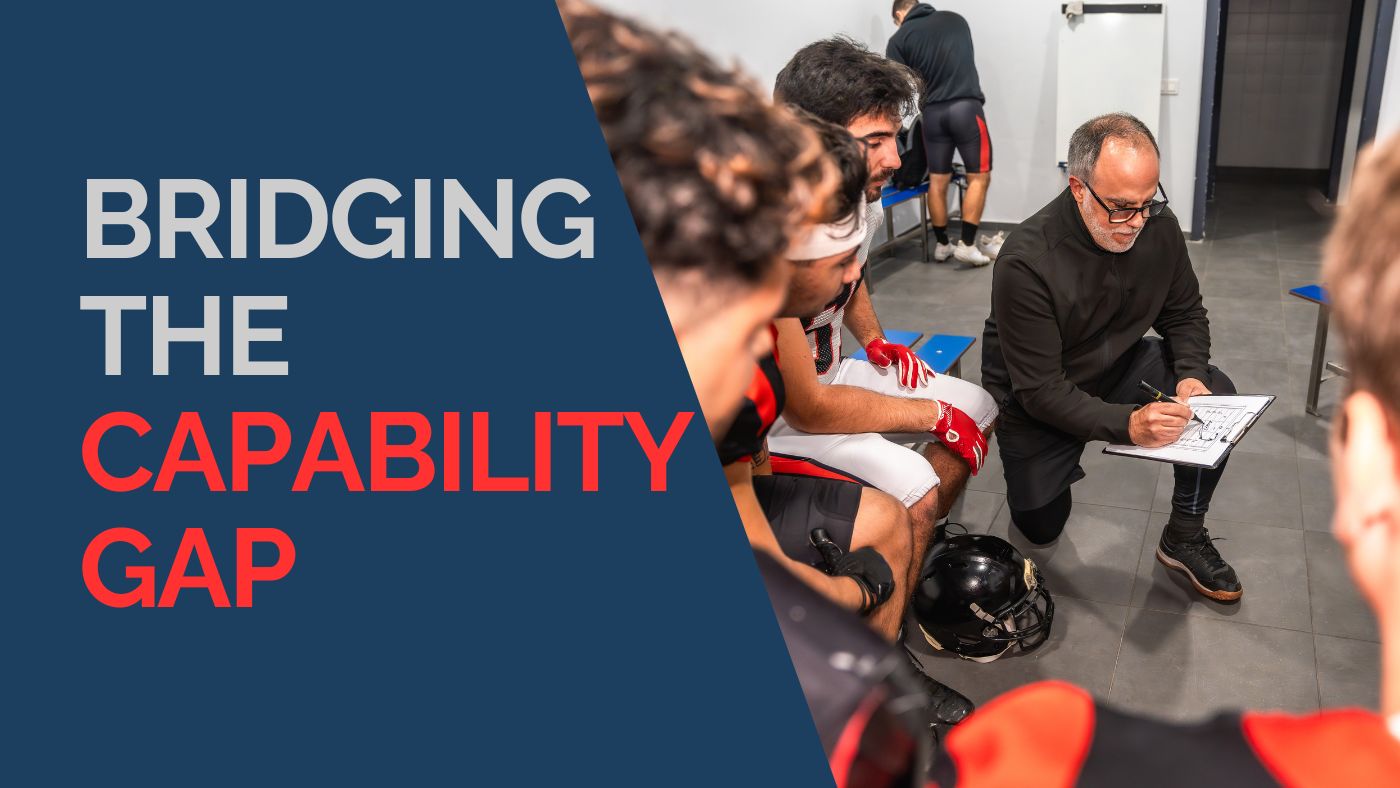
The real problem is The Capability Gap.
The term has gained broader attention thanks to Nick Saban, who explained why focusing on capability matters more than talking about potential. Potential is theoretical. Capability is practical. It reflects what someone can execute, repeatedly, under real conditions.
For growing businesses, the capability gap is rarely about effort or intelligence. It is about whether people are supported by the right tools, the right systems, and the right kind of help when friction appears.
This is where ProSafeIT fits. Not as “IT support,” but as the structure that allows people to perform at their best as the organization grows.
What the capability gap actually looks like inside a growing business
The capability gap shows up quietly at first. It rarely announces itself as an emergency. It feels like small inefficiencies, temporary workarounds, or “we will fix that later” moments.
Common signs include:
- Employees know what needs to be done but spend time fighting systems
- New hires take longer to ramp up than expected
- Processes vary by person instead of following a consistent pattern
- Technology decisions accumulate without a clear standard
- Small technical problems stop real work at the worst possible times
None of these issues indicate bad people. They indicate an environment that has not kept pace with growth.
As companies add employees, locations, clients, and complexity, the gap between responsibility and support widens. People are asked to do more, faster, and with higher stakes. If the environment does not evolve with them, capability stalls.
This is why so many leadership teams feel stuck. They have strong people, solid demand, and ambitious goals, yet execution feels harder than it should.
Why “potential” is the wrong word for growing companies
Potential assumes the problem is internal to the person. Capability recognizes that performance is shaped by context.
Two equally capable employees can perform very differently depending on the systems around them. The one with clear processes, reliable tools, and responsive support will outperform the one who has to invent solutions on the fly.
Growing businesses often celebrate potential during hiring, then unintentionally limit capability after onboarding. The tools worked when the company was smaller. The informal processes were fine when everyone sat in the same office. The “just ask Bob” approach was acceptable when Bob was always available.
Growth breaks those assumptions.
At scale, capability requires structure.
The three forces that close the capability gap
At Stringfellow Technology Group, ProSafeIT is built around a simple idea. People perform best when three things are aligned:
Trusted technology
A proven playbook
Friendly support
Each one plays a specific role in closing the capability gap.
Trusted technology removes friction from daily work
Technology should expand what people can do, not slow them down.
In many growing businesses, technology becomes a patchwork. Tools are added reactively. Decisions are made to solve short term problems. Over time, employees inherit systems that are inconsistent, unreliable, or poorly integrated.
This creates hesitation. People double check their work. They delay action. They create personal workarounds to protect themselves from failure.
Trusted technology changes that dynamic.
When systems are selected intentionally, configured consistently, and supported properly, employees stop thinking about the tools and focus on the work. They trust that files will be accessible. They trust that collaboration will work. They trust that security will not disrupt productivity.
With ProSafeIT, trusted technology is not about chasing trends. It is about recommending tools that are proven in real business environments and aligning them to how people actually work.
The result is simple but powerful. Employees move faster because they do not need to second guess their tools.
The proven playbook turns effort into repeatable performance
Talent without structure leads to inconsistency. One person excels. Another struggles. Outcomes vary based on who happens to be involved.
The ProSafeIT playbook exists to eliminate that variability.
This playbook is not documentation pulled from a template. It is not a framework that can be hired or purchased elsewhere. It is the result of decades of real experience supporting hundreds of organizations through growth, change, and complexity.
The playbook defines:
How systems are designed and maintained
How onboarding works as companies scale
How security is implemented without disrupting operations
How changes are introduced without breaking workflows
Most importantly, it creates consistency.
When employees operate within a consistent environment, their capability increases. They do not need to reinvent processes. They do not rely on tribal knowledge. They do not depend on a single person to keep things running.
The playbook removes guesswork. It allows people to focus on their role, their clients, and their outcomes.
That is how potential turns into performance.
Friendly support keeps momentum moving
Capability gaps often appear at the worst possible moment. A deadline is approaching. A client is waiting. A small technical issue suddenly blocks progress.
How support responds in that moment matters.
Friendly support is not just about fixing the issue. It is about preserving momentum. It is about meeting people where they are, understanding the context of the problem, and helping them move forward quickly.
In a growing business, hesitation is expensive. When employees feel comfortable asking for help early, small problems stay small. When support feels unapproachable or slow, issues compound.
ProSafeIT treats support as a teaching moment whenever possible. Each interaction reinforces confidence instead of frustration. Over time, employees become more capable because they understand both the tools and the reasons behind them.
This is how organizations avoid the silent erosion of productivity that so often accompanies growth.
How the capability gap widens as companies grow
Growth amplifies everything. What was manageable at ten employees feels chaotic at fifty. What worked in one location struggles across multiple offices. What was informal becomes risky.
The capability gap widens in three predictable ways:
Responsibility increases faster than support
Processes fail to scale with headcount
Technology decisions lag behind operational needs
Without intervention, leaders respond by pushing harder. They ask people to do more. They add pressure instead of structure.
This approach burns out high performers and frustrates teams.
ProSafeIT exists for organizations that recognize a different truth. Sustainable growth requires an environment that supports execution at scale.
Why ProSafeIT is built for growing businesses, not static ones
Many IT providers focus on maintenance. Keep the lights on. Fix what breaks. Respond to tickets.
That model works for stable environments. It breaks down during growth.
ProSafeIT is designed around growth as a constant. The playbook anticipates change. Trusted technology choices reflect scale. Support is structured to handle increasing demand without degrading the experience.
This is why ProSafeIT resonates with leadership teams who feel like they have outgrown their current IT provider. The problem is not effort or commitment. The problem is alignment.
Growing businesses need a partner who understands how capability evolves as complexity increases.
The business cost of ignoring the capability gap
The capability gap is expensive, even when it feels manageable.
Hidden costs include:
Slower onboarding and longer time to productivity
Inconsistent client experiences
Increased security risk due to workarounds
Leadership time spent troubleshooting instead of planning
Over time, these costs compound. Growth slows. Morale declines. Leaders feel like they are pushing uphill.
Closing the capability gap is not about perfection. It is about removing unnecessary friction so people can perform at the level the business now demands.
From potential to performance
As organizations plan for the coming years, the question is not whether their people are capable. It is whether the environment allows them to perform consistently.
ProSafeIT helps growing businesses bridge that gap by aligning trusted technology, a proven playbook, and friendly support around real world execution.
When those elements work together, capability becomes repeatable. Performance becomes predictable. Growth becomes sustainable.
If your team is talented but feels slowed down, the issue is not motivation. It is structure.
ProSafeIT exists to close that gap.